
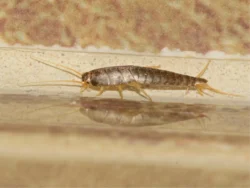
If you’ve seen a small, fast-moving insect dart across your bathroom floor or disappear behind a bookshelf, there’s a good chance it was a silverfish. These ancient insects — they’ve been around for more than 400 million years — are among the most common household pests in Florida, and they thrive in the state’s notoriously humid climate.
So should you be worried? The short answer is: not about your health, but potentially about your belongings. This guide covers everything Florida homeowners need to know about silverfish: what they are, what causes them, what damage they can do, and — most importantly — how to get rid of silverfish before they settle in for good.
What Are Silverfish?
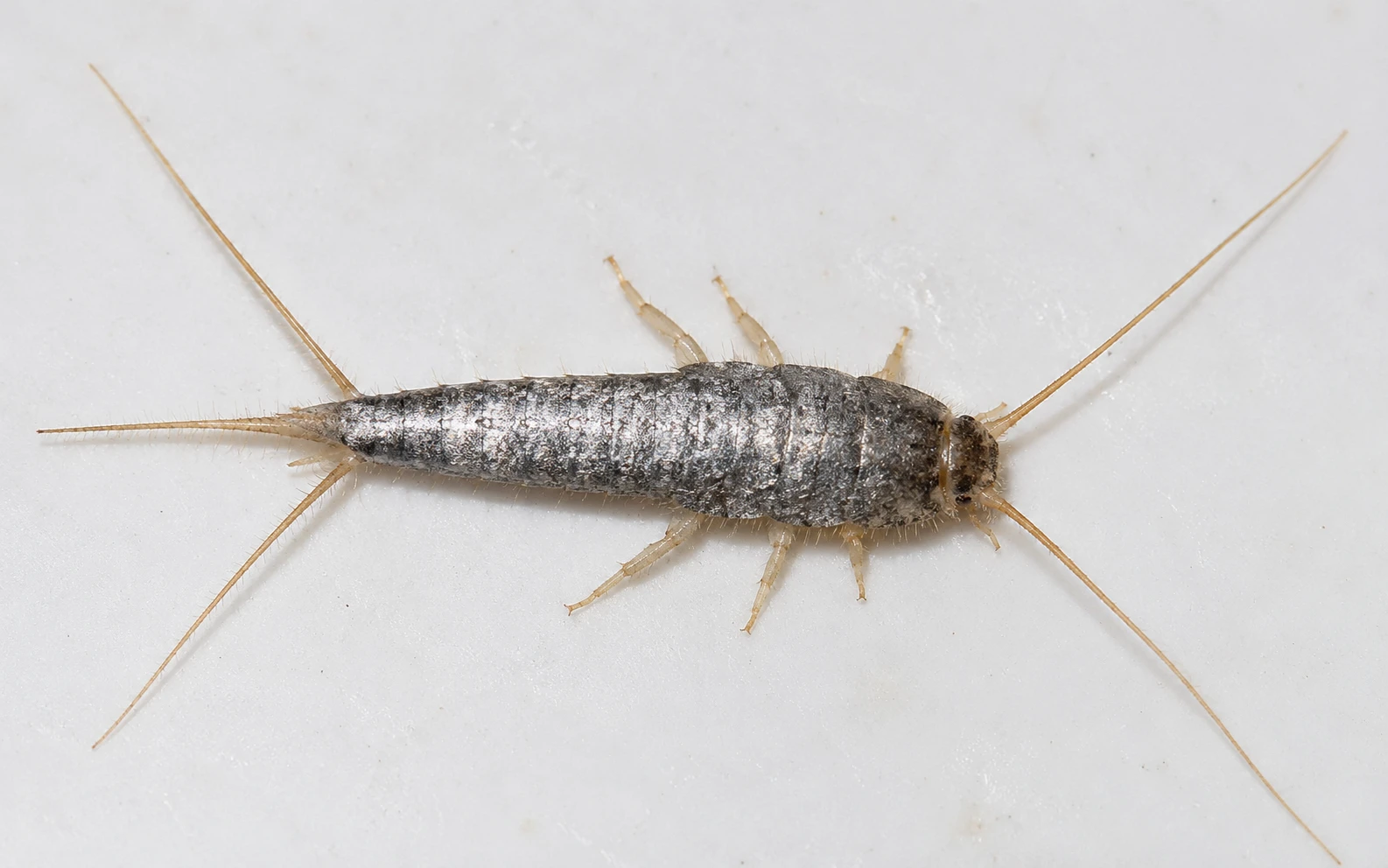
Silverfish (Lepisma saccharina) are small, wingless insects that grow to about ¾ inch long. They have a teardrop-shaped body covered in shimmery silver-gray scales, three long tail bristles at the rear, and two long antennae up front. Their wriggling, wave-like movement resembles a fish swimming — hence the name.
They are nocturnal and extremely fast, which is why most people only spot them occasionally and often mistake them for other insects. In Florida, silverfish are active year-round thanks to consistent humidity and warmth, making infestations harder to contain than in drier climates.
They feed on starchy and sugar-rich materials: paper, cardboard, book bindings, wallpaper paste, fabric, and even certain foods like oats, dried pasta, and flour. They don’t need much water on their own — they absorb moisture directly from the air, which is why humidity control is central to any silverfish management plan.
Are Silverfish Dangerous?
Silverfish pose no direct threat to humans or pets. They do not bite, do not sting, and are not known to transmit disease. If you pick one up, you’ll get nothing worse than a fast-moving insect scrambling out of your hand.
The concern is property damage. Silverfish can eat through and ruin books, photographs, important documents, vintage clothing, wallpaper, and food stored in cardboard packaging. A small infestation that goes unnoticed for months can cause significant damage to stored belongings, especially in attics, closets, and storage rooms.
Their presence also signals high humidity — and sustained high indoor humidity creates conditions favorable to mold growth, wood rot, and structural deterioration. If silverfish have moved in, it’s worth investigating the moisture conditions in your home.
What Causes Silverfish Infestations in Florida?
Florida’s climate does a lot of the work for silverfish. With ambient humidity regularly above 70%, the state naturally supports silverfish populations in a way that drier climates simply don’t. But specific conditions inside your home accelerate the problem:
High indoor humidity. Bathrooms without exhaust fans, poorly ventilated attics and crawl spaces, and basement areas are prime habitats. Silverfish thrive at humidity levels above 75–80%.
Paper and cardboard storage. Boxes of books, old newspapers, magazines, and cardboard storage cartons are both a food source and a nesting area for silverfish. Attics and garages stuffed with such materials are a common infestation starting point.
Leaking pipes. Even a slow drip under a bathroom or kitchen sink creates the damp micro-environment silverfish need. Combined with the darkness of a cabinet interior, it’s ideal harborage.
Moving boxes. Silverfish and their eggs are frequently transported unknowingly through infested cardboard boxes — particularly from storage units, old homes, or warehouses.

How to Get Rid of Silverfish: Step-by-Step
Silverfish control requires addressing both the infestation and the conditions supporting it. Here’s an effective approach:
1. Lower indoor humidity. This is the most impactful step. Use a dehumidifier in bathrooms, attics, and storage areas to bring humidity below 50%. Ensure bathrooms have functioning exhaust fans and run them during and after showers.
2. Fix plumbing leaks. Inspect under all sinks, around toilet bases, and along any exposed pipes for drips or condensation. Even minor moisture is enough to sustain a silverfish population.
3. Declutter paper and cardboard. Replace cardboard storage boxes with sealed plastic bins. Donate, recycle, or securely store paper materials that have accumulated in attics, closets, and garages. Removing the food source forces silverfish to look elsewhere.
4. Seal cracks and gaps. Caulk gaps around baseboards, pipes, and utility penetrations. These are the routes silverfish use to move between walls, floors, and living spaces.
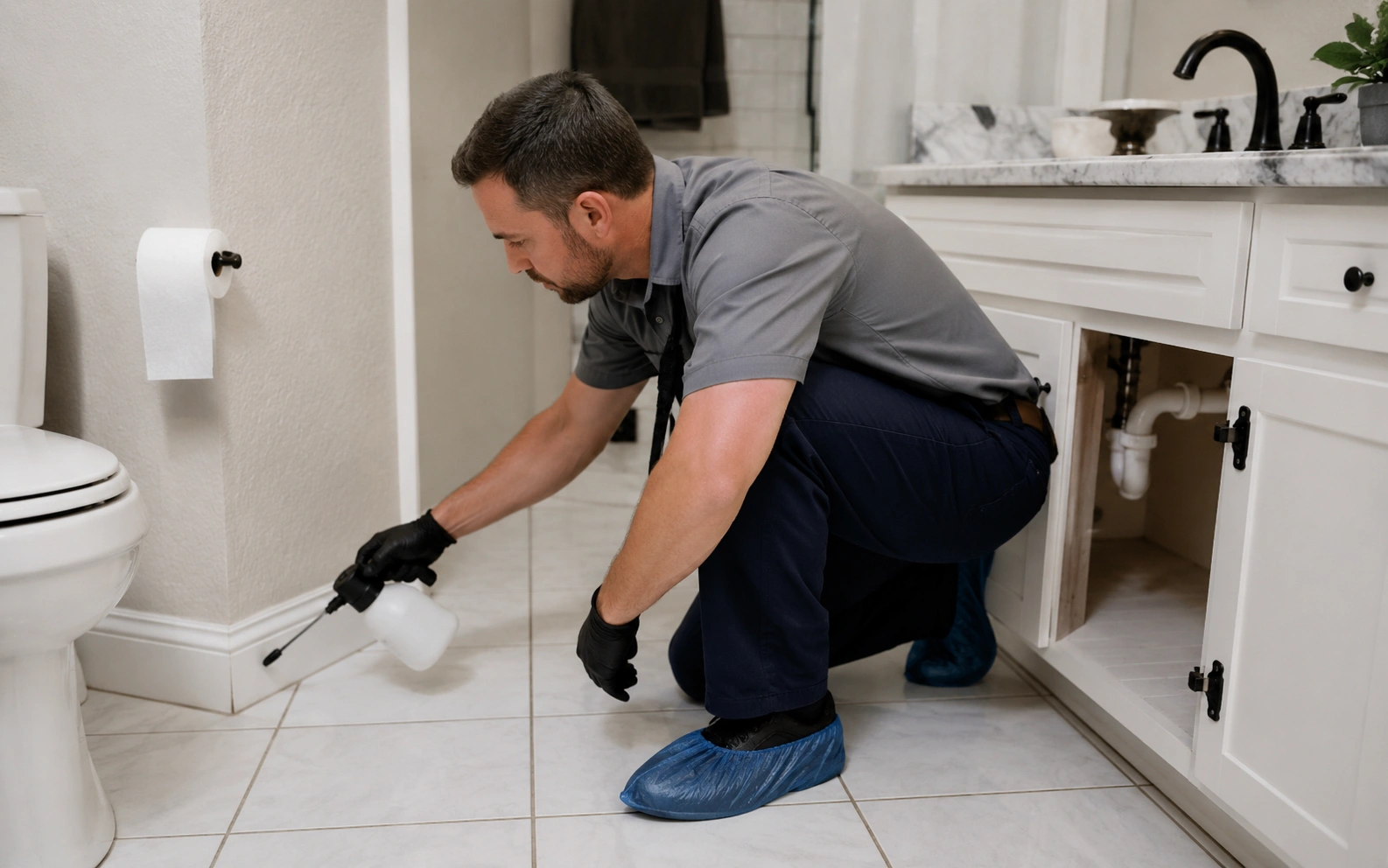
5. Use professional pest control for persistent infestations. DIY traps and powders (like diatomaceous earth or boric acid) can reduce numbers but rarely eliminate a full silverfish population, especially in walls and sub-floor voids where silverfish nest. A licensed technician can apply targeted treatments in harborage zones and set up ongoing preventive service.
According to University of Florida IFAS Entomology researchers, silverfish thrive in Florida’s humid conditions year-round and are best controlled through a combination of moisture reduction, harborage elimination, and targeted treatment — particularly in wall voids and sub-floor areas where they nest.
Silverfish Won’t Go Away on Their Own
McCall Pest & Wildlife offers same or next day service for silverfish and general pest infestations throughout Florida. Call 888-409-0938 or request a free inspection online — our Florida-licensed technicians know exactly where silverfish hide.
DIY vs. Professional Silverfish Control
| Approach | Best For | Limitations |
|---|---|---|
| Dehumidifier + ventilation | Prevention; mild moisture issues | Doesn’t eliminate existing population |
| Diatomaceous earth / boric acid | Surface silverfish in accessible areas | Doesn’t reach nests inside walls |
| Sticky traps | Monitoring population size | Captures only a fraction of population |
| Professional pest control | Active infestations; recurring problems | Requires scheduling a visit |
Frequently Asked Questions About Silverfish
Are silverfish dangerous?
Silverfish are not dangerous to humans or pets. They do not bite, sting, or transmit disease. However, they can cause real property damage — eating through paper, books, wallpaper, clothing, and stored food over time. Large populations also indicate underlying moisture problems that can lead to mold or structural damage.
What causes silverfish in my house?
Silverfish are drawn to high humidity, darkness, and starchy food sources. In Florida, they are especially common in bathrooms, attics, basements, and closets. Leaky pipes, poor ventilation, cardboard boxes, and books stored in humid spaces all attract them. They can also be introduced into a home through infested boxes or paper goods.
How do I get rid of silverfish?
To get rid of silverfish, reduce humidity with a dehumidifier or improved ventilation, fix any leaking pipes, seal cracks around baseboards and pipes, and store paper goods in sealed plastic containers. Eliminate cardboard boxes, which are both a food source and a harborage. For persistent infestations, professional pest control treatment is the most effective solution.
Do I need pest control for silverfish?
DIY methods can reduce silverfish numbers but rarely eliminate a full infestation, especially in Florida’s humid climate. If you are seeing silverfish regularly, noticing damage to books, wallpaper, or clothing, or if DIY efforts have not worked, professional pest control is the most effective and lasting solution. A licensed technician can treat harborage zones and set up preventive service.
Ready to Eliminate Silverfish for Good?
McCall’s Florida-licensed pest professionals provide same or next day service and targeted silverfish treatment plans. Call 888-409-0938 to schedule your inspection or request one online today.